




Justify! Campaign
More protection in pediatric imaging exams.
The Radiation Protection Committee of the Brazilian College of Radiology and Diagnostic Imaging (CBR), in partnership with the Brazilian Society of Pediatrics (SBP), reinforces its commitment to pediatric radiological safety and invites the entire medical community to actively participate in the national campaign.
Justify!, an initiative dedicated to the judicious use of imaging exams in children and adolescents.
Launched in 2020 and strengthened since then by the joint action of SBP and CBR, the campaign highlights the importance of raising awareness among pediatricians and other referring physicians about the responsible use of computed tomography and radiographs, emphasizing the central role of the Justification Principle.

This principle dictates that radiological examinations should only be requested when there is a clear clinical benefit, considering that children are more sensitive to the effects of ionizing radiation and have a longer life expectancy, which increases the importance of proper indication.
"Imaging tests should only be requested when there is a plausible and fundamental justification."
A campaign aligned with the international Image Gently movement.

The Brazilian initiative is aligned with the global Image Gently campaign, linked to the Alliance for Radiation Safety in Pediatric Imaging, which brings together more than one hundred scientific institutions on five continents. Created in 2006 by the Society for Pediatric Radiology, the campaign has expanded over the years to areas such as fluoroscopy, interventional radiology, and dentistry.
In addition to the Brazilian Society of Pediatrics (SBP) and the Brazilian College of Radiology (CBR), the campaign has the support of several national and international organizations, including the Federal Council of Medicine (CFM), the Brazilian Medical Association (AMB), the Brazilian Association of Medical Physics (ABFM), the Brazilian Society of Orthopedics and Traumatology (SBOT), the Latin American Society of Pediatric Radiology (SLARP), the Inter-American College of Radiology (CIR), the Latin Safe Radiological Protection Committee, and the World Federation of Pediatric Radiology (WFPI).
The campaign also involves the professionals responsible for performing the tests, encouraging technical adjustments and protocols adapted to the physical characteristics of the young patients.
Next steps
The CPR-CBR presents three major ongoing projects to strengthen awareness and promote safe practices in pediatric radiology:
• Project 1 – Communication about risk and benefit in radiological examinations
Distribution of educational materials (brochures translated and adapted by the CBR), webinars, and activities with multiple specialties and patient representatives.
• Project 2 – Dissemination of the 10 actions of the Bonn Call for Action
An international initiative by the IAEA and WHO that guides the strengthening of the culture of radiation protection, including justification, auditing and adequacy of protocols, as well as dose optimization.
• Project 3 – Diagnostic reference levels in computed tomography
Establishment and suggestion of reference levels for children and adults based on the biotype of the Brazilian population.
Why is a critical attitude on the part of a pediatrician essential?
Children exhibit greater biological sensitivity to radiation and a longer lifespan for potential stochastic effects. Therefore, the indication for examinations should be individualized, carefully considered, and aligned with the best evidence.
Proper guidance reduces unnecessary exposures and contributes to safer, more effective medical practice that is aligned with international recommendations.
A message to Brazilian pediatricians
The campaign reinforces the message promoted by the International Atomic Energy Agency:
"Education is the key to requesting the right exam at the right time."
The CPR-CBR invites all pediatricians and those requesting imaging exams to adopt the Justification Principle as a daily practice, strengthen the safety culture, and participate in the Justify! campaign. The greater the adherence, the greater the protection offered to our pediatric patients.
FAQ – Justify! Campaign
Radiation protection in pediatric examinations.
1. What is the Justify! campaign?
The campaign Justify your answer! This is a joint initiative of the Brazilian Society of Pediatrics (SBP) and the Brazilian College of Radiology and Diagnostic Imaging (CBR), with support from CPR-CBR, which promotes the rational and responsible use of radiological examinations in children and adolescents. Its main focus is to reinforce the Principle of Justificationensuring that examinations involving ionizing radiation are requested only when clinically necessary.
2. Why is the campaign important for children and teenagers?
The pediatric population is more sensitive to the effects of ionizing radiation and has a longer life expectancy, which increases the cumulative impact of exposures. Correctly ordering tests avoids unnecessary exposures, improves safety, and increases the effectiveness of care.
3. What is the Principle of Justification?
This is the first principle of radiation protection according to the IAEA and the WHO. It states that No radiation exposure should occur without a clear benefit to the patient.
In a pediatric context, this means that CT scans, X-rays, and other tests should be ordered. only when there is a clear clinical indication. that truly contributes to the diagnosis or treatment.
4. Which exams are the focus of the campaign?
The campaign especially emphasizes tests that use ionizing radiation, such as:
• Computed tomography;
• Conventional X-rays;
• Fluoroscopy It is interventional procedures, depending on the clinical context.
The campaign also connects to international initiatives that include dentistry, intervention, and other areas of pediatric radiology.
5. Is the Justifique! campaign aligned with international initiatives?
Yes. The Brazilian campaign is linked to the international movement. Image Gently, member of Alliance for Radiation Safety in Pediatric Imaging, which brings together more than 100 institutions around the world.
Furthermore, it is aligned with 10 actions from Bonn Call for Action from the IAEA and WHO, which guide the improvement of radiation protection in medicine until 2030.
6. What results has the campaign already demonstrated?
Projects linked to the campaign, such as the CONSENSUS project, applied in Brazilian hospitals, demonstrated reduction of 11 to 26% in requests for unjustified examinations.
This data was presented at national and international conferences, reinforcing the positive impact of the initiative.
7. How do technicians and technologists participate in the campaign?
The campaign also guides the professionals responsible for performing the exams to:
• Adjust dose protocols;
• Adapt technical parameters to the child's physical size;
• Use appropriate immobilization when necessary;
• Implement practices that avoid unnecessary repetition.
The involvement of the technical team is essential to guarantee Dose optimization and image quality.
8. What are CPR-CBR's current projects related to the campaign?
CPR-CBR conducts three projects directly related to the topic:
Project 1: Communication regarding the risks and benefits of radiological examinations;
Project 2: Announcement of the 10 Bonn Call for Action actions;
Project 3: Establishing diagnostic reference levels for computed tomography in Brazil.
These projects strengthen safe clinical practice and reinforce the application of the Justification.
9. Are X-ray examinations safe for children?
Yes, when properly indicated and performed with appropriate protocolsThe risk is small, but it should not be ignored. Safety depends on... correct justification and from dose optimization, ensuring that only the radiation necessary for diagnostic quality is used.
10. How can pediatricians contribute?
Pediatricians play an essential role in radiation protection for children:
• Carefully assessing the need for the examination;
• Avoiding routine requests or those with no impact on behavior;
• Considering alternative methods without radiation, when applicable (e.g., ultrasound and MRI);
• Discussing with radiologists when there is doubt about the most appropriate examination.
11. How can I access the campaign's educational materials?
CPR-CBR provides translated and adapted brochures and materials on:
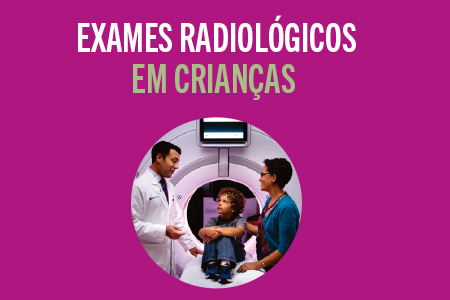
• Radiological examinations;
• Interventional procedures;
• Computed tomography (CT) scan.
These materials can be used by doctors, patients, parents, and healthcare institutions.
12. How can my institution participate in the campaign?
Hospitals, clinics, and radiology services may:
• To disseminate educational materials;
• Incorporate the Principle of Justification into internal protocols;
• Promote training for teams;
• Participate in CPR-CBR webinars and events;
• Implement audits of examination requests.
The CPR-CBR can support institutional actions and guide local initiatives.
13. What final message does the campaign leave for professionals?
Ordering the right test, at the right time, for the right patient is the foundation of safety in pediatric radiology.
The Justify! campaign reinforces:
Education, awareness, and responsible clinical practice save lives and protect our children.