


International recognition of Brazilian quality in diagnostic imaging opens new opportunities for strengthening healthcare accreditation in Latin America.
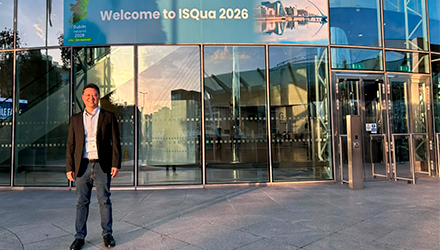
The Diagnostic Imaging Accreditation Program (PADI) of the Brazilian College of Radiology and Diagnostic Imaging (CBR) had its standard reaccredited by International Society for Quality in Health Care External Evaluation Association (ISQua EEA) for the 2026-2030 cycle. The announcement was made during the ISQua EEA IAP session. Awards, at the 42nd ISQua International Congress, held between September 27 and 30 in Dublin, Ireland.
The achievement reaffirms that the PADI standard meets the international criteria for development, governance, and evaluation adopted by the leading institution in quality accreditation. During the congress, the CBR and the Diagnostic Imaging Accreditation Commission (CADI) were represented by the commission's coordinator, Dr. Adriano Tachibana, who presented a study based on 89 audits conducted in 2024 and 2025. The analysis of 703 non-conformities allowed for the identification of recurring patterns and risks, supporting educational actions and continuous improvement in diagnostic imaging services.
Recognition
ISQua occupies a prominent position in the global healthcare quality landscape. Unlike accreditation bodies that evaluate private hospitals and healthcare services, this organization evaluates the accreditation programs themselves, their standards, and their evaluator training processes. In other words, it is an organization that evaluates those who evaluate.
The reaccreditation of the PADI standard therefore represents a validation that its requirements were developed in accordance with international benchmarks. For services accredited by the program, this means confidence that the criteria used in their evaluation have themselves undergone a rigorous international review process. For managers, regulators, and payers, it is an important indicator of the scope and credibility of the model adopted by the CBR.
The recognition also reinforces a trajectory built over the last few years by PADI, which has continuously invested in the evolution of its standards, the training of professionals, and the consolidation of a culture of quality and safety in diagnostic imaging services. In 2026, the program promoted five in-person training sessions on version 6 of the standard, bringing together nearly 200 professionals from different regions of the country for training in standard interpretation and internal auditing.
Latin America on the healthcare quality agenda
In addition to reaccreditation, CBR's participation in the congress was essential for integrating the regional dialogue on quality and safety of care. During the meeting of Latin American Community of Practice, Representatives from Peru, Argentina, Mexico, and Brazil discussed strategies to expand the influence of quality initiatives in public health policies and highlighted the role of medical specialty societies as partners in this process.
The three main Brazilian initiatives for accreditation in diagnostic medicine were represented at the meeting: PALC, from the Brazilian Society of Clinical Pathology/Laboratory Medicine (SBPC/ML); PADI, from CBR; and PACQ, from the Brazilian Society of Pathology (SBP).
Another highlight was the meeting with Pedro Delgado, the new CEO of ISQua. During the meeting, the executive reaffirmed his commitment to the organization's actions in Latin America. Delgado highlighted his track record in the region and signaled an interest in expanding partnerships and initiatives focused on developing quality and safety in healthcare in Latin American countries.

New quality legislation in healthcare.
Alongside the official congress program, representatives from CBR, SBPC/ML, and SBP also exchanged information about Law No. 15,524, enacted in September 2026, which establishes the National Strategy for Control and Evaluation of the Quality of Healthcare provided by the private sector.
The legislation provides for the definition of quality standards for private health services and recognizes accreditation as one of the elements that may comprise the evaluation processes, according to future regulations from the National Health Surveillance Agency (Anvisa).
During the discussions, a proposal emerged to promote a joint dialogue between medical entities, Anvisa (Brazilian Health Regulatory Agency), and the National Supplementary Health Agency (ANS), with the aim of contributing technically to the regulation of the new legislation and discussing indicators applicable to the reality of diagnostic medicine.
Next steps for PADI
The reaccreditation of the standard marks an important achievement and inaugurates a new phase for the program. CADI will discuss the application of the new artificial intelligence requirements of version 6 of the standard, as well as evaluate the training of expert consultants to monitor AI performance in services, and define the requirements and timeline for obtaining program accreditation from ISQua EEA.
This regional expansion strategy will be consolidated through continuous contact with Pedro Delgado, the ISQua team, and representatives from Peru, Argentina, and Mexico, strengthening PADI's role in Latin American health quality initiatives. Nationally, the program will formally invite ANVISA (Brazilian Health Regulatory Agency) and ANS (National Agency for Supplementary Health) for a joint discussion with CBR (Brazilian College of Radiology), SBPC/ML (Brazilian Society of Clinical Pathology/Medical Sciences), and SBP (Brazilian Society of Pediatrics) regarding the regulation of Law No. 15.524 and the role of accreditation as outlined in Article 5.
More than just international recognition, reaccreditation reinforces the commitment of CBR and PADI to the continuous improvement of healthcare quality, patient safety, and the sustainable development of diagnostic imaging services in Brazil.